
Savoring Tokyo’s History and Cultural Treasures Through Its Cityscape: An Architecture Route Guide for the Street Kart Experience
For anyone interested in Tokyo’s history and cultural treasures, there’s a different kind of appeal beyond simply touring famous sites one by one—the appeal of experiencing firsthand how architecture appears within the flow of the city. When you take it all in—Asakusa’s Kaminarimon Gate, the red-brick Tokyo Station building, the surrounding streets, and the modern high-rises nearby—Tokyo’s history starts to reveal itself not as isolated points but as one continuous landscape.
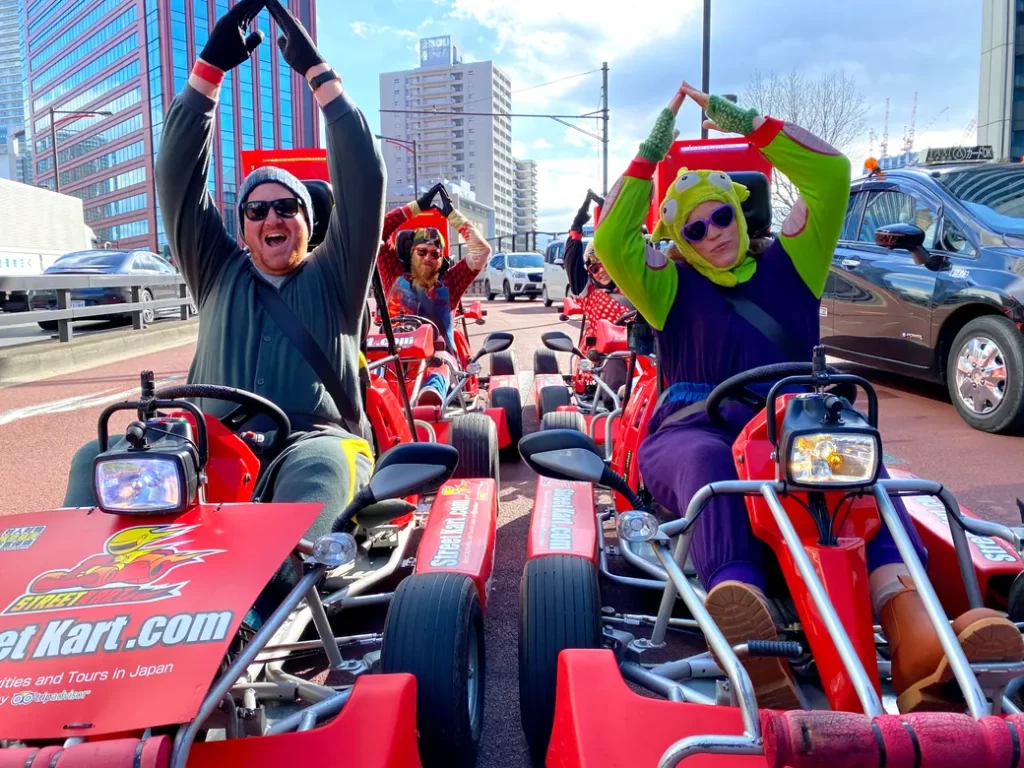
One of the easiest ways to gain that perspective is the street kart experience, where you ride under the lead of a guide. On foot, your attention tends to drift toward the fine details right in front of you, and traveling by train tends to chop one location off from the next. But in an experience where you move along the city’s roadways, the way architecture looks shifts as time passes. If you’re planning an itinerary around the theme of Tokyo history and cultural treasures, the defining feature of this experience is that it lets you take in not just the historic buildings themselves, but their relationship to the surrounding districts and to contemporary architecture.
What It Means to See Tokyo’s Historic Buildings in “the City’s Context”
Tokyo’s historic scenery is a little different from a place like Kyoto, where an entire area is preserved as one piece. Areas that still carry traces of the Edo period, buildings that symbolize the modernization that began in the Meiji era, and urban redevelopment from the postwar period through today all overlap within relatively short distances. That’s precisely why there are layers of the city that are hard to grasp by viewing a historic building on its own.
In Asakusa, for example, the local character is shaped not only by the iconic impression of the Kaminarimon Gate, but by the flow of people moving around it, the density of the shopping streets, and the contrast with the modern high-rise structures rising up in the distance. The same is true around Tokyo Station: only when you can see the streets of Marunouchi, the scale of the office district, and the urban continuity that stretches toward Ginza—not just the beauty of the station building alone—does the meaning of the architecture become three-dimensional.
The street kart experience is a way of getting around that makes it easier to grasp these “connections between buildings and the city.” According to Street Kart’s official guidance, the format has a guide leading along a set course determined for each location—it is not free-roaming driving. Because the route is organized in advance, even on your first visit to Tokyo you can focus on the changing scenery, which feeds into a sense of taking in architecture within the city.
Feeling the Overlap of History and the Present in Asakusa
If you’re choosing a course with Tokyo’s history and culture in mind, Asakusa is a strong candidate. According to the Street Kart official site, the Asakusa location’s “Samurai-S” course is listed as roughly 45 minutes to one hour. You depart from the shop, pass through the Kaminarimon Gate, and head toward Tokyo Skytree. It’s a setup that, in a short span of time, makes it easy to capture both a historic landmark and a structure that symbolizes modern Tokyo within your field of view.
The charm of Asakusa is that it doesn’t end with viewing historic buildings merely as objects of appreciation. The vermilion of the Kaminarimon has a strong presence even from a distance, and as you draw closer, that impression deepens, tied together with the air around it and the density of the streets. Meanwhile, the vertical form of Tokyo Skytree rises up in stark contrast against Asakusa’s low-rise cityscape. The highlight of this area is that old Tokyo and new Tokyo don’t switch over from one to the other in a clear-cut way—they coexist within the same view.
With walking tours, you inevitably spend long stretches stopping to gaze at a single subject. That’s effective for understanding the fine details of historic architecture, but grasping the continuity of the cityscape as a whole calls for a different perspective. While riding a street kart, every time you pass through an intersection the density of the signage, the width of the road, the height of the buildings, and the way the distant view opens up all change—making it easier to see that Asakusa is not merely a tourist spot, but a place where daily life, faith, and urban development overlap.
Asakusa is also an area that’s easy to supplement on foot before and after the experience. If you walk around the surroundings before the kart experience, it becomes easier to connect with the scenery you see while riding. Conversely, if you walk around the Kaminarimon area again after the experience, you can compare how the gate and districts you just saw from the road look from a stationary viewpoint. For anyone who wants to savor Tokyo’s history and cultural treasures deeply, this back-and-forth is worthwhile.
The Akihabara Route: Viewing Modern Architecture with Tokyo Station as Its Axis
If you’re interested in modern architecture or urban landscapes, the Akihabara location’s route is an easy option to consider as well. According to the Street Kart official site, the Akihabara location’s “A1-S” course runs about one hour, departing from Akihabara, passing through Tokyo Station and Ginza, and returning to Akihabara. The distinctive feature of this route is that it strings together cityscapes with very different characters—Akihabara as an electronics district, Tokyo Station as a symbol of modern architecture, and Ginza with its polished commercial scenery.
Tokyo Station is highly recognized as a historic building, but its value also lies in the fact that it continues to be used as a hub of urban function even today. The red-brick station building is beautiful as preserved scenery, yet around it spread modern office buildings, wide roadways, and well-ordered streets. When you view it not as a quiet sightseeing spot but as a core of the city that absorbs enormous flows of people and traffic every day, the impression the architecture makes changes dramatically.
In the flow from Akihabara to Tokyo Station and on to Ginza, the city’s expression shifts in stages. The change from Akihabara’s bustle, to the refined scenery of Marunouchi, to the sophisticated streets of Ginza shows that Tokyo’s history isn’t made up of a single era. Even for readers whose search intent centers on Tokyo history and cultural treasures, this route easily becomes a gateway to reading not just individual buildings, but the whole of urban design from modernization onward.
The fact that Ginza is included in the course matters, too. After seeing the weighty red-brick architecture of Tokyo Station, the connection to Ginza’s orderly commercial scenery lets you see how historic buildings coexist with present-day urban activity. As a result, Tokyo Station isn’t cut off as a “building of the past”—it becomes easier to understand as part of an ongoing, present-tense urban landscape.
How to Look at the Street Kart Experience When Incorporating It into Historical Sightseeing
If you think of the street kart experience as part of historical sightseeing, the real star is the way the city’s appearance changes. During the experience, you do need to pay attention to driving and your surroundings, but moving along a guide-led route makes it easier to follow the changes in districts even in unfamiliar territory. Rather than memorizing a huge number of building names, if you stay conscious of where the sky opens up, where the density of the streets increases, and which architecture leaves an impression in the distance, Tokyo’s history and cultural treasures stay in your memory as the structure of the city.
In Asakusa, your understanding deepens if you focus on the contrast between the atmosphere of religious sites and the temple-town with the modern landmark. On the Akihabara route, the view comes into focus more easily if you pay attention to Tokyo Station as the gateway of a modern nation and how it connects to a contemporary commercial area. On either route, comparing the impression you got from the road with the impression you get when you revisit on foot advances your understanding of the scale of the architecture and its surrounding environment.
Even if historic architecture is your goal, it’s better not to try to see everything in a short time. Rather, narrowing your observation to the relationship between one or two iconic buildings and the cityscape around them actually raises the density of the whole experience. Tokyo is a city overflowing with information, so it’s useful to treat the act of moving itself as observation time.
Official Information to Check Before Booking
If you’re considering using Street Kart, you must check the guidance on the official site. Course details, durations, location information, and booking pathways can all be confirmed at the kart.st official site. The information for the Asakusa and Akihabara locations mentioned here is also posted on the official pages.
Regarding the license required to drive, it’s important to check the Driver’s License guide. The official guidance lays out the required documents depending on your circumstances—a Japanese driver’s license, an International Driving Permit based on the 1949 Geneva Convention, a driver’s license from an eligible country along with a Japanese translation, SOFA-related documents, and so on. Because what matters is not your nationality but the type of license you hold and the conditions under which it was issued, you’ll need to confirm before departure whether you meet the requirements that apply to you.
In addition, each location page also provides guidance such as arriving up to 30 minutes before your reservation time, bringing original documents, and notes on attire. Even if you’re building your plans mainly around sightseeing for history and cultural treasures, getting these confirmations done in advance—so there are no gaps in your preparation on the day of the experience—makes it easier to put your itinerary together.
Reading Tokyo’s History and Cultural Treasures While on the Move
Tokyo’s historic buildings are worth stopping to examine in detail. At the same time, what kind of districts they sit in, and how they connect to the contemporary urban landscape, can be hard to see unless you’re on the move. The changes in scenery—the Kaminarimon and Tokyo Skytree in Asakusa, and the stretch from Akihabara to Tokyo Station and on to Ginza—make you feel Tokyo’s history not as fragments of separate eras, but as overlapping layers of the city.
If you’re planning a trip from the perspective of Tokyo history and cultural treasures, setting aside time to grasp the cityscape as a whole, alongside walking tours, will deepen your understanding. The street kart experience is one method that easily functions as a guideline for that. For anyone interested not only in knowledge about individual buildings but in how buildings appear within the city, the routes around Asakusa and Tokyo Station are easy options to consider.
For detailed course information and booking conditions, refer to kart.st, and check the license requirements at https://kart.st/en/drivers-license/. The perspective of viewing Tokyo’s history and cultural treasures together with the flow of the city leads to an understanding that’s a little different from the standard tour of famous sights.
Our shop does not rent out costumes related to Nintendo or “Mario Kart.” We provide only costumes that respect intellectual property rights.
A Note About Costumes
Our shop does not rent out costumes related to Nintendo or “Mario Kart.” We provide only costumes that respect intellectual property rights.

