
Morning Tokyo or Evening Tokyo? What to Decide Before Your Group's First Street Kart Ride
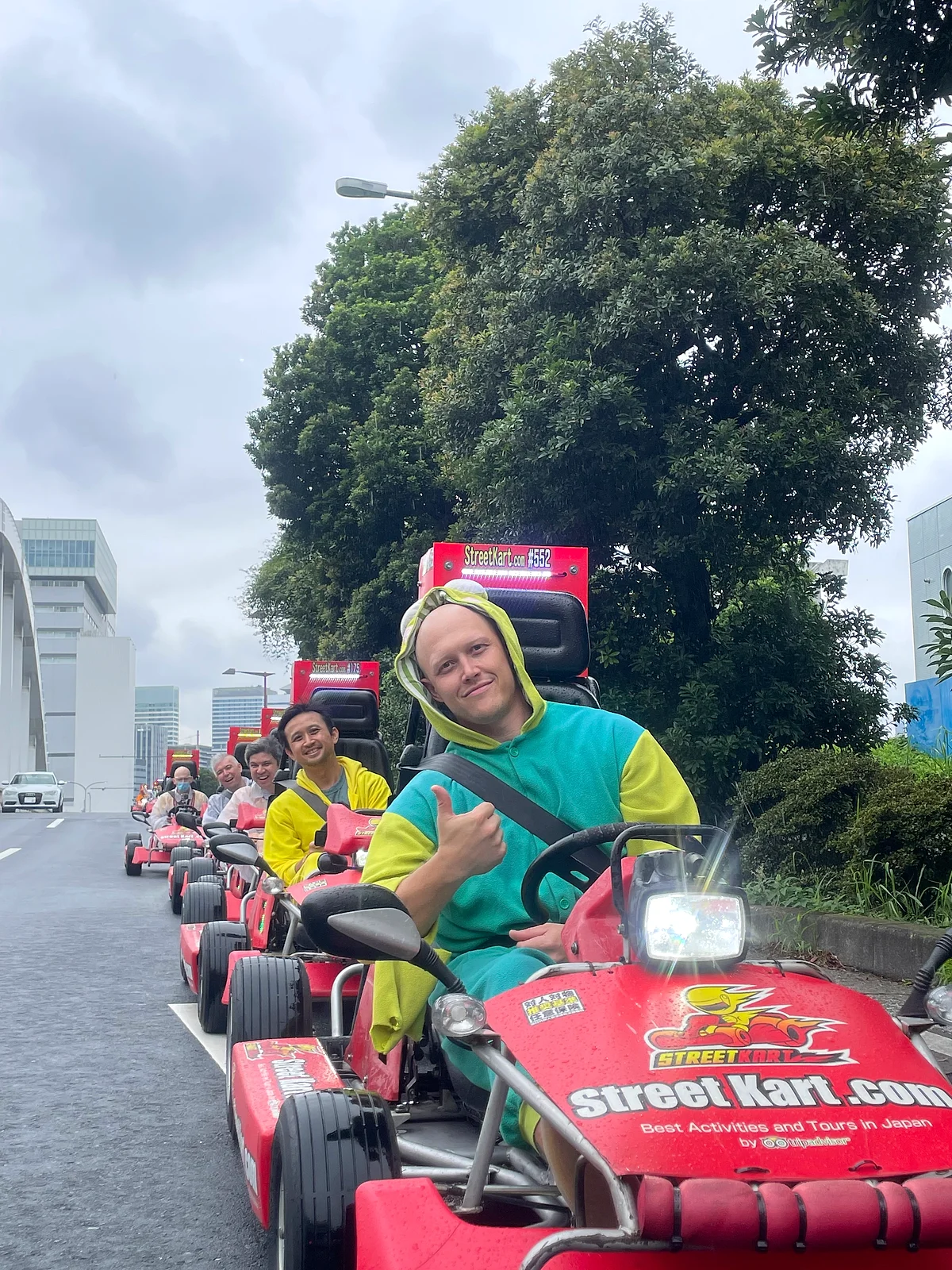
Morning Tokyo or Evening Tokyo? What to Decide Before Your Group's First Street Kart Ride
Shibuya wakes up in the morning to the sound of rising shutters and the smell of coffee. By evening, the same intersection is packed with neon and waves of people. Few cities change their look this much depending on the time of day.
If you're coming to Tokyo as a group to ride a street kart, the first thing to talk about may not be where to drive. It may be which Tokyo you want to see: morning Tokyo or evening Tokyo. With a big group, this kind of conversation tends to get put off. But if you settle it first, everything that follows falls into place much more easily. This article walks through the decisions one at a time, in an order that keeps first-time groups from getting lost.
What actually changes in Tokyo between morning and evening?
First, let's lay out how morning and evening differ. Once the differences are clear, it becomes easier for each member to say what they want to see.
Morning Tokyo: a quiet beat as the city wakes up
If morning Tokyo were a piece of music, it would be the intro. Light bounces off glass towers, and the streets still look a little wider. Footsteps hurry toward the station, shops make small noises before opening, and delivery trucks idle with a low rumble. Everything is understated, as if the city is slowly turning up its volume.
If your group includes photography fans, morning light is worth aiming for. Buildings tend to show their true colors, so the red brick of the station building and the red of the tower stand out sharply.
If you choose the morning, pay a little attention to clothing too. Depending on the season, the morning air can still be chilly. The official guidance also recommends a jacket suited to the season. Closed-toe shoes are a must. Sneakers are a safe choice. Avoid sandals and heels. If your group checks with each other the night before ("What are you wearing tomorrow?"), you can avoid someone having to run back to change shoes in the morning.
Evening Tokyo: the build-up as the light changes
Evening Tokyo is the build-up just before a song peaks. The sky shifts from orange to purple, and lights come on one by one in signs and office windows. You get to witness the exact moment the daytime city turns into the nighttime city.
One thing to keep in mind is that "evening" means very different things depending on the season. When the days are long, you'll still be driving through a bright city in the evening. From autumn through winter, the sun sets early, and the same "evening" slot can look closer to a night view. What color the sky turns at what time depends on the season and the weather, so it's worth looking up the sunset time for your travel dates as a group.
On summer evenings, strong sunlight can linger even as the sun gets lower. Bring a hat, sunglasses, and sunscreen.
The order for group decisions: a plan first-timers can follow
Now for the main part. With a large group, coordinating everyone's schedule tends to take time. That's why it helps to put your decisions in order. If you settle them one by one, your group chat won't fill up with opinions until no one can move.
First, ask roughly who prefers morning and who prefers evening. Before picking a date and time, have everyone say what they want to see: "I want to take photos in the quiet morning streets." "I want to drive in the evening light." The trick is to collect the reasons too. If someone is going to a club or live music venue the night before, an early start the next day might be hard. On the other hand, someone else may want to get up early and have breakfast at a market. Sharing how everyone's day will flow ahead of time helps avoid arguments later.
Next, choose candidate dates. Even if you decide you want to ride in the morning, you may not be able to book your preferred time on that day. There's also the weather. In light to moderate rain, tours run as scheduled, and raincoats are provided free of charge. In heavy rain or a typhoon, tours may be canceled or shortened. In that case, you'll choose between a shortened tour with a refund of the difference, switching to another day, or canceling for a full refund. If you keep two or three candidate dates instead of just one, switching to another day becomes much easier. For details on weather policies and the latest information on dates, times, and availability, check the Street Kart official website.
Third, check driver's licenses. You don't want to discover on your trip that one person doesn't meet the requirements. Which licenses are accepted depends on the country, so share the official guidance with every member and have each person check for themselves. The most reliable source for details is the official website. Do this early in the planning, not right before the trip.
One point that's easy to overlook: karts are single-seaters, and passengers are not allowed. A member who doesn't meet the requirements can't ride along in someone else's kart. If it looks like someone in your group won't be riding this time, decide in advance where they'll spend their time during the tour and where you'll meet up after you finish. Can everyone ride, or are there members who can't? It's fine to make the final morning-or-evening decision after you know the answer.
Fourth, book early. Weekends fill up quickly, so groups that want to ride on a weekend should book especially early. You can find how to book on the official website. With a large group, assigning one person to handle the booking helps prevent double bookings and missed messages.
Finally, plan how you'll gather on the day. The shops don't have parking, so public transportation is the standard way to get there. For a group, it's a good idea to meet first at the nearest station and then head to the shop together. That way, if someone is running late, it's easier to estimate how long you'll need to wait.
This is also the time to decide about luggage. The shops have lockers for small items, but they aren't suited for large luggage like suitcases. Avoid scheduling a tour right after checking out of your hotel. Instead, leave large bags at the hotel and gather with light loads. Pack whatever you keep with you into a small bag that can go on the kart. Also, there's check-in and a safety briefing on the day, so give yourselves plenty of time before the meeting time. Check how many minutes early you should arrive in your booking information or on the official website.
Imagine the morning and evening scenery at each shop
There are seven shops in Tokyo. The two Akihabara shops are in almost the same location, as are Shibuya and Shibuya Annex. Here we'll cover Akihabara, Shibuya, Shinagawa, and Tokyo Bay in Shin-Kiba. Courses are set by shop and plan, so check the official website to see which sights you'll pass. At every shop, tours are led by trained guides. Each person gets their own kart. You follow the guide ahead of you while steering your own way through the city. With that in mind, here are some hints to help you imagine how the views might change between morning and evening.
Tours from the Akihabara shops can take you past sights like the red-brick Tokyo Station building, Ginza, and Akihabara's Electric Town. When you come out in front of Tokyo Station, the red-brick building fills your view from side to side. In morning light, the red brick of the Marunouchi Station Building, which opened in 1914, comes straight into view. Akihabara in the evening, on the other hand, starts lighting up its signs and takes on the colorful look you'd expect from Electric Town. It's the same neighborhood, but it changes as if someone swapped in a different playlist. The Wako clock tower at the Ginza 4-chome intersection is another view whose impression shifts between morning and evening. In the morning you notice its calm stone outline, and by evening it blends into the lights of the shops along the street.
Tours from the Shibuya shop can include places like the Scramble Crossing, Harajuku, and the zelkova-lined avenue of Omotesando. On a morning drive along Omotesando, the green of the zelkova trees and the outlines of the buildings flow by on both sides at an unhurried pace. The word "refined" fits it perfectly. In the evening, Shibuya gradually turns up the volume of both its crowds and its lights. What that rise feels like is something you should see for yourself. The Hachiko statue, famous as a meeting spot, is also a sight you can encounter on a Shibuya tour. If your group includes first-time visitors to Tokyo, talk beforehand about where you'll see it so no one misses it on the day.
Tours from the Shinagawa shop feature the Rainbow Bridge, Tokyo Tower, and the Shibaura and Tamachi bay area. On the road toward Tokyo Tower, the 333-meter tower grows larger ahead of you little by little. In the morning, its red and white stand out against the blue sky. After sunset, the scene changes to the lit-up tower floating in the distance. The Shinagawa shop also offers an evening option with lighter traffic (details may change, so check the official website).
Tours from the Tokyo Bay shop (Shin-Kiba) open up views of the Rainbow Bridge, Odaiba, and Tokyo Tower. The 798-meter Rainbow Bridge is a symbol of Tokyo Bay, lit up in seven colors at night. When you come out onto the Rainbow Bridge in the morning, the sea breeze hits you head-on and the view opens up wide. In the evening, the colors of the sky fall onto the water, and your photography fans might go quiet for a while. Some courses from the Tokyo Bay shop also let you enjoy night views during the evening time slot.
How to spend the time before and after the tour
While you're driving, the scenery flows past one view after another. Driving with the wind and the city sounds around you, both the morning quiet and the evening bustle should feel a little different. That's exactly why deciding where to stop before and after the tour helps your day connect smoothly. Here too, the choices differ for morning groups and evening groups.
If your group picks a morning tour, why not make a pre-tour breakfast part of the fun? Toyosu Market, about 10 minutes by car from the Tokyo Bay shop, is busiest from early morning through late morning, and you can enjoy a sushi or seafood breakfast there. From the Shibuya shop, you could have a morning meal at Blue Bottle Coffee Shibuya, about a 10-minute walk away. Near the Akihabara shops, you can make a morning visit to Kanda Myojin Shrine, about a 10-minute walk away. Shinagawa Shrine, about a 5-minute walk from the Shinagawa shop, has stone steps and a Fujizuka (a miniature Mt. Fuji mound), and walking there in the quiet morning air is a nice way to start. In Shinagawa, you can also plan a flow of visiting the shrine, heading to the tour, and having lunch around Shinagawa Station afterward. atré Shinagawa is directly connected to the station, so you can find a lunch spot there.
If your group picks an evening tour, plan it together with how you'll spend the night afterward. Around the Shibuya shop, you can go straight to dinner in Shibuya after your drive. Tennozu Isle, about a 20-minute walk from the Shinagawa shop, is a canal-side area with art galleries, cafés, and restaurants. It's a great place to raise a glass together after the drive. With the Tokyo Bay shop, you can walk around Odaiba during the day, drive on the evening tour, and then take in the night view of the Rainbow Bridge. With the Akihabara shops, try walking through the lit-up Electric Town after your drive.
The tip for large groups is to decide on your post-tour dinner spot in advance. After driving, everyone is still excited, and if you start searching for a restaurant on the spot, it usually won't come together.
Start by asking your group chat: morning or evening?
Morning Tokyo is an intro that quietly turns up the volume. Evening Tokyo is a build-up as the light changes. Whichever you choose, you'll meet a different side of Tokyo.
What matters for a group is not trying to get everyone's answers at once. Ask whether people prefer morning or evening. Keep multiple candidate dates. Have everyone check the license requirements. Book early. Plan the meetup and luggage. Just by sticking to this order, your plans will come together even with a large group.
All that's left is to send one message to your group chat tonight:
"Morning or evening, when should we ride?"
This article was originally written in Japanese and translated using AI. Some expressions may read unnaturally, and we appreciate your understanding. For the most accurate and up-to-date information, please refer to the official site at kart.st.
Street Kart is not affiliated with Nintendo or the Mario Kart series in any way. We do not provide costumes of Nintendo characters, and such costumes may not be worn during tours even if brought by participants.